
“The purpose of architecture is to shelter and enhance man’s life on earth
and to fulfill his belief in the nobility of his existence,” said Eero Saarinen in 1959.

Saarinen’s architectural legacy embodies the spirit of giddy potential and unfettered optimism that characterized post-war America. Iconic projects such as the Gateway Arch in St. Louis, the Dulles International Airport Terminal in Washington D.C., and the Kresge Auditorium on MIT’s campus exemplify his groundbreaking brand of mid-century modernism.
Eero Saarinen, born in Finland to renowned architect Eliel Saarinen and textile designer Loja Saarinen, immigrated to the United States with his family in 1923. Settling in Michigan, Eliel co-founded the Cranbrook Academy of Art and designed most of the campus buildings, which are now a National Historic Landmark. During his time at Cranbrook, Eero worked alongside his father as a student apprentice. It was there that he met Charles Eames, marking the beginning of their lifelong collaboration.
In 1934, Saarinen graduated from the School of Architecture at Yale University. As his career progressed, he faced criticism for adapting his style to meet the needs and preferences of his clients. However, Saarinen viewed his clients as “co-creators” and was committed to pushing the boundaries of modernism, what he called the “measly ABC.” Clients recognized his creative potential. After his father’s passing in 1950, Saarinen became the principal partner of Saarinen & Associates, and the firm experienced significant growth, earning him a cover spot on Time magazine in 1956. At the forefront of America’s post-war expansion, Saarinen developed a distinctive visual language for corporate and college campuses, including headquarters for John Deere, IBM, and CBS, as well as buildings for Vassar College, MIT, and his alma mater, Yale.
Saarinen didn’t overlook the smaller sculptural pieces required to furnish his ambitious projects. Although he began designing furniture in his teens, it wasn’t until he and Charles Eames won first prize in the Museum of Modern Art’s “Organic Design in Home Furnishings” competition in 1940 that he gained recognition as a furniture designer. Although their award-winning molded plywood chairs were never produced, the recognition launched the careers of both men. Eames went on to work for Herman Miller, while Saarinen partnered with his former Cranbrook associates, Hans and Florence Knoll. His Pedestal Table, Tulip™ Chair, Womb™ Chair, and Executive Seating have all become easily recognizable icons of American modernism.
Eero Saarinen, a renowned architect, tragically passed away at the age of 51 in 1961 due to complications from surgery for a brain tumor. His untimely demise was a profound loss for the architectural world. Coincidentally, his wife, Aline, succumbed to the same affliction a decade later. Despite his untimely demise, Saarinen’s legacy lived on through his partners at Saarinen & Associates, Kevin Roche and John Dinkeloo, who completed his remaining ten projects. In 2002, Roche made a significant contribution by donating Saarinen’s papers and drawings to the Yale University Library. This donation sparked renewed interest in Saarinen’s life and work, leading to the establishment of Eero Saarinen: Shaping the Future, an exhibition and archival project dedicated to preserving the midcentury master’s remarkable legacy.
Shop Designs from Eero Saarinen

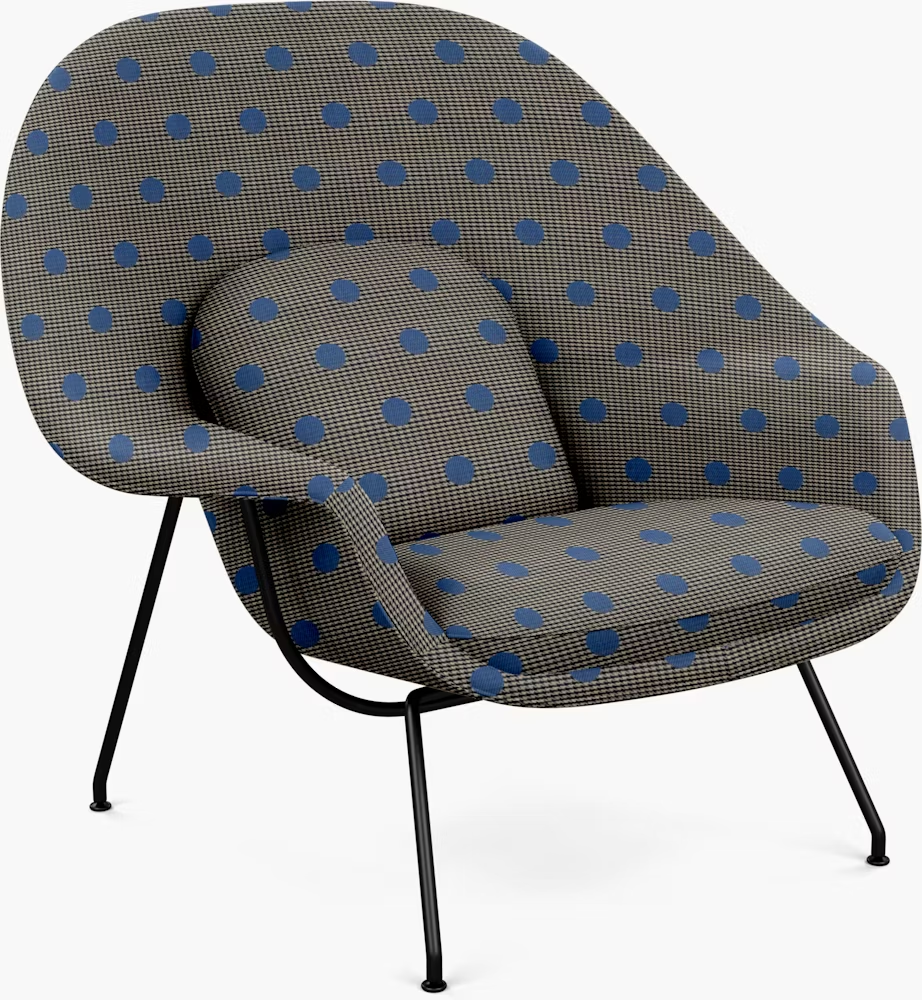
Womb Chair
customization options


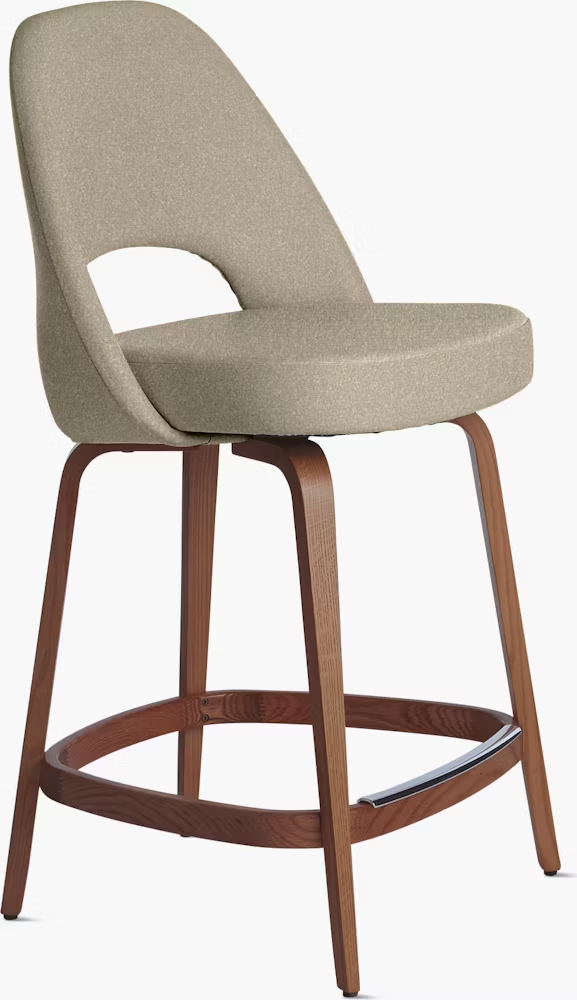

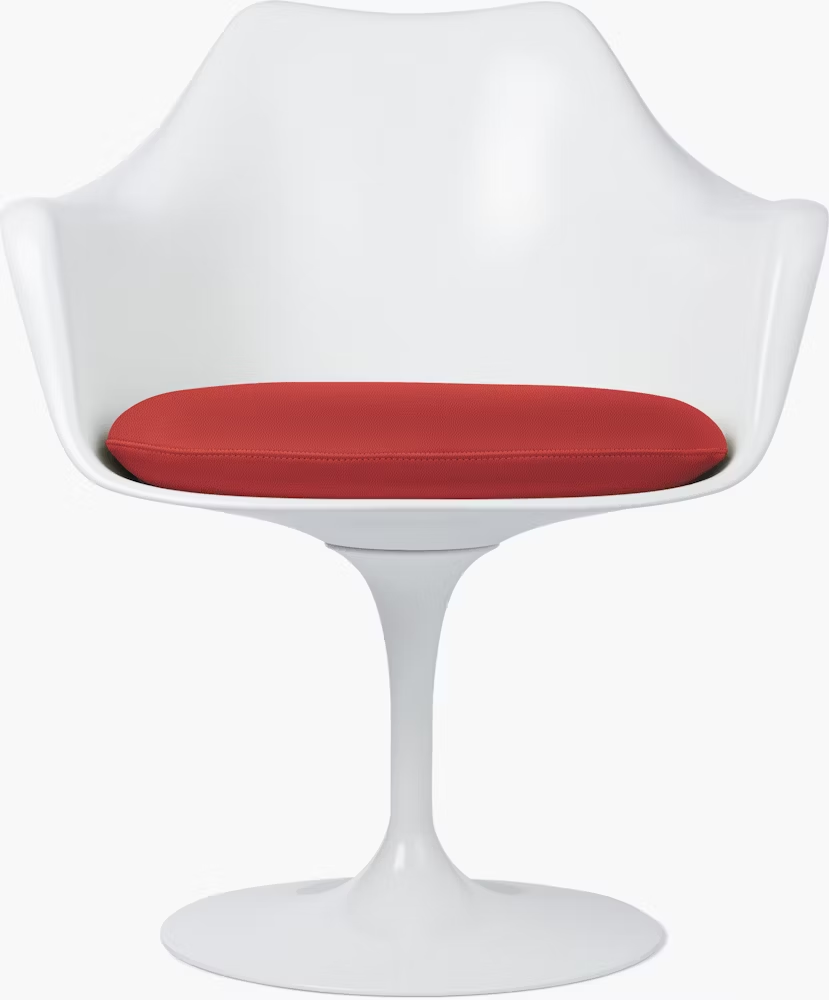




Saarinen Executive Office Armchair
customization options




Promotional content – If you purchase or book via one of our links, Luxe-Edit.com may earn a commission.